A Dune-inspired spacesuit turns astronaut pee into drinking water
Dune-inspired spacesuit

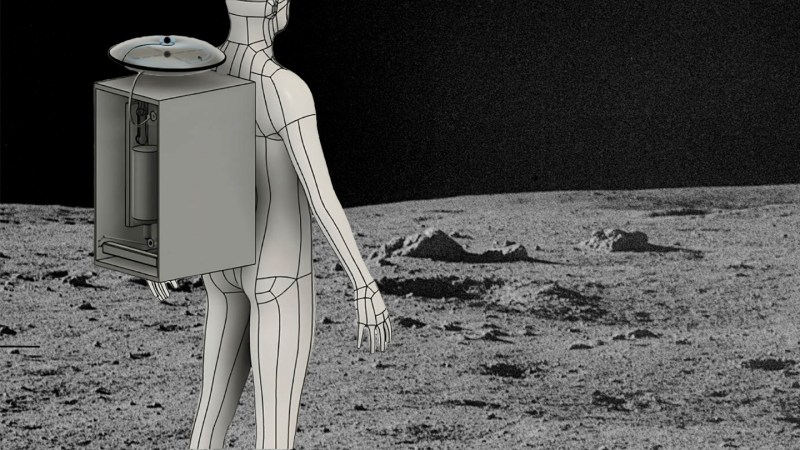
In the science-fiction series Dune, the desert-dwelling Fremen of the arid planet Arrakis recycle their body’s moisture using specially designed outfits called stillsuits. Inspired by such imaginings, a new prototype spacesuit converts astronauts’ urine into drinkable water, researchers report July 12 in Frontiers in Space Technology. “I’ve been a fan of the Dune series for … Read more


The second law of thermodynamics underlies nearly everything. But is it inviolable?

Art of four eggs, from left to right, getting progressively more cracked. In the far right egg, it

In real life, laws are broken all the time. Besides your everyday criminals, there are scammers and fraudsters, politicians and mobsters, corporations and nations that regard laws as suggestions rather than restrictions. It’s not that way in physics. For centuries, physicists have been identifying laws of nature that are invariably unbreakable. Those laws govern matter, … Read more

Stopping cachexia at its source could reverse wasting from cancer

An illustrated brain is outlined in blue on a black background. An area of the brain stem at the base of the brain is highlighted in orangy-red. This area is a target for a potential treatment aimed at reversing the wasting that comes along with advanced cancer.

People with advanced cancers often feel like their bodies are wasting away. That’s because of cachexia, a condition in which impaired metabolism leads to muscle wasting and drastic weight loss (SN: 4/15/15). A new study in mice hints at a way to reverse the condition. Blocking the activity in the brain of an immune protein … Read more

Sulfur was key to the first water on Earth

Earth ocean

A chemical element that’s not even in H2O — sulfur — is the reason Earth first got its water, a new study finds, bolstering a similar claim made a year ago. The discovery means our planet was born with all it needed to create its own water and so did not have to receive it … Read more

Some ‘forever chemicals’ may be absorbed through our skin

A girl in a raincoat holding an umbrella

Forever chemicals are everywhere.  They’re in school uniforms, food packaging, cosmetics and personal care products (SNE: 11/18/22; SN: 6/4/19; SN: 6/15/21). They seep into our food and drinking water. And now new research suggests that some can move through the skin, posing yet another avenue through which humans are intimately exposed to these chemicals, which … Read more

4 questions about the uranium needed for next-generation nuclear reactors

Laboratory equipment used to produce high-assay low-enriched uranium.

Nuclear power of the future is going to need fuel. That has governments, energy companies and nuclear engineers clamoring to get their hands on HALEU: high-assay low-enriched uranium. HALEU (pronounced like “Hey, Lou”) was previously a niche material, used mainly in nuclear reactors conducting scientific research. But now, multiple companies in the United States have … Read more

Jurassic Park inspires a new way to store DNA data

A close-up illustration of a translucent amber-colored rock with a DNA double helix held inside

Sometimes science fiction does inspire science research. À la Jurassic Park’s entombed mosquito, scientists have developed a method to store DNA in an amberlike material and still extract it easily hours later. This storage method is cheaper and faster than existing options, the researchers report in the June Journal of the American Chemical Society. If … Read more

NASA’s Perseverance finds its first possible hint of ancient Mars life

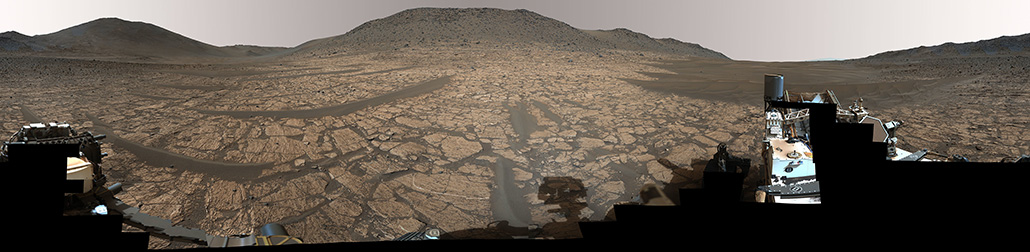
An image of a rock on Mars taken by the NASA rover Perseverance. Rocky white stripes flank a clay-colored area that is speckled with dark spots.

NASA’s Perseverance rover has bagged its first hint of ancient microbes on Mars. “We’re not able to say that this is a sign of life,” says Perseverance deputy project scientist Katie Stack Morgan of NASA’s Jet Propulsion Lab in Pasadena, Calif.  “But this is the most compelling sample we’ve found yet.” The rover drilled up … Read more

Was Egypt’s first pyramid built with hydraulics? The theory may hold water

Egyptian King Djoser

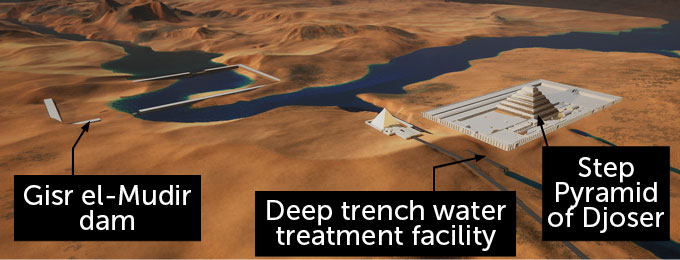
Waterpower may have given a big lift to builders of Egypt’s oldest known pyramid, the nearly 4,700-year-old Step Pyramid of Djoser at Saqqara. Ancient architects built a hydraulic system for hoisting stone blocks that were used to assemble King Djoser’s six-tiered, roughly 62-meter-tall pyramid, scientists propose August 5 in PLOS ONE. Controlled flows of water … Read more