Earthquakes added to Pompeii’s death toll
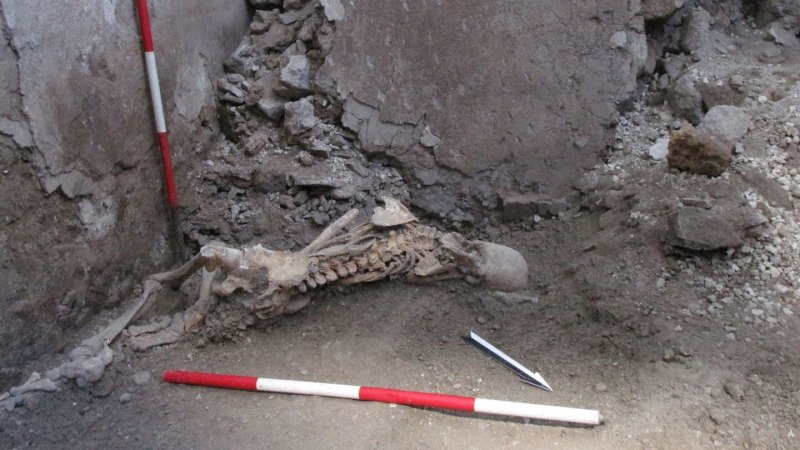
A photo of a skeleton with broken bones in an excavated house in Pompeii, Italy.

In A.D. 79, a massive volcano in southern Italy suddenly, explosively awoke, leading to one of the ancient world’s deadliest natural disasters. Ash and gas from the eruption killed at least 1,500 people in the ancient cities of Pompeii and Herculaneum. Now, a new analysis suggests that powerful earthquakes concurrent with the eruption may have … Read more
The North Star is much heavier than previously thought

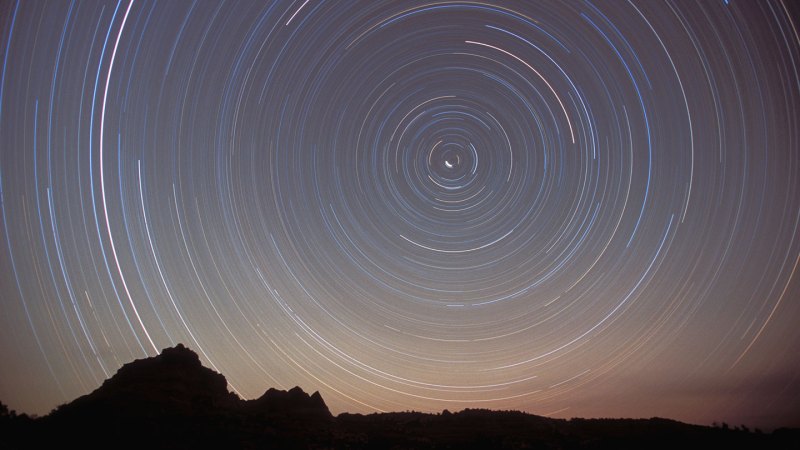
A time-lapse photo of the night sky over Coyote Buttes, Ariz., shows stars leaving circular trails around a bright point in the middle, which is the North Star.

The star marking true north is a good deal heavier than we thought. The North Star is 5.1 times as massive as the sun, astronomers report in work submitted July 12 to arXiv.org. That value, calculated from the motion of a much fainter star that orbits the luminary, is nearly 50 percent heavier than a … Read more

Alzheimer’s blood tests are getting better, but still have a ways to go

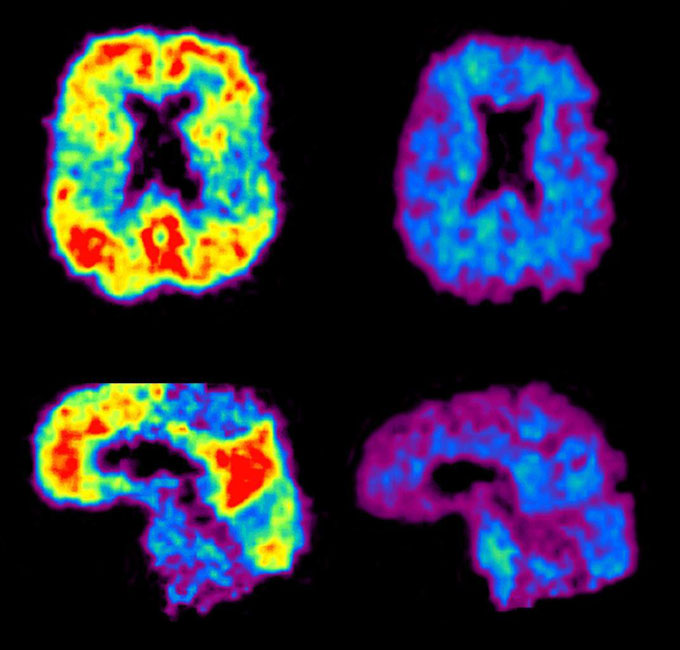
A vial of blood is put into a tube rack, with medical images of a brain in the background.

Alzheimer’s disease is hard to diagnose. But proteins in the blood might provide clarity. A series of recent findings, presented at the annual Alzheimer’s Association International Conference in Philadelphia and in research papers, raise the possibility of a simple blood draw to help doctors figure out if a person’s cognitive problems are caused by Alzheimer’s … Read more

Something weird is happening to Earth’s inner core

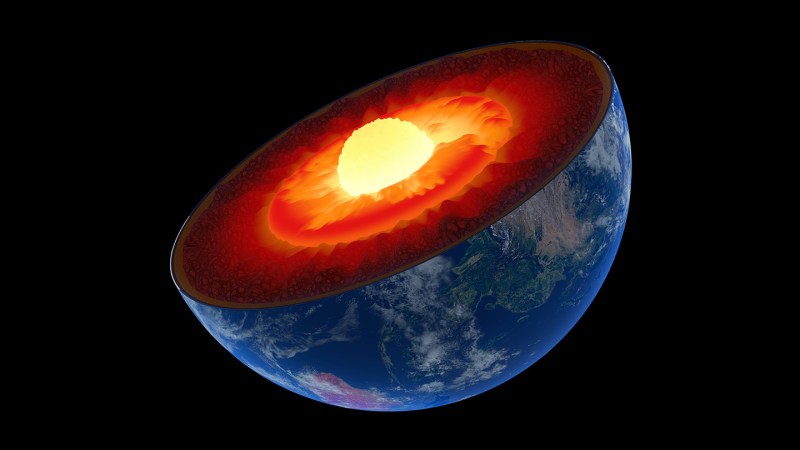
An illustration of the Earth sliced in half to expose a glowing inner core

Something strange is happening at Earth’s center. Decades of earthquake data show that Earth’s inner core has been rotating slower than its mantle and surface since around 2010, researchers report June 12 in Nature. The study appears to confirm a controversial finding from last year that the inner core may have reversed its rotation relative … Read more

A planet needs to start with a lot of water to become like Earth

An illustration of a planet with blue watery oceans, reddish land, and an atmosphere, seen from above

In planet formation, as in poker, you have to play the hand you’re dealt. If an Earthlike planet is the goal, the best starting hand might contain three to eight times all the water in Earth’s oceans. “There’s kind of a sweet spot,” says Keavin Moore, a planetary scientist at McGill University in Montreal. Less … Read more

An Egyptian mummy’s silent ‘scream’ might have been fixed at death

A mummy with her mouth wide open

An ancient Egyptian mummy, dubbed the “Screaming Woman” for what appears to be an open-mouthed look of pain or fear, might have had that expression fixed in place by a rare muscle reaction when she died. Sudden muscular stiffening associated with violent deaths under extreme physical and emotional stress, known as cadaveric spasm, could explain … Read more

Jupiter’s Great Red Spot may be less than 200 years old

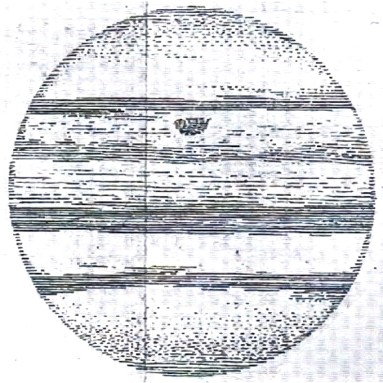
Jupiter Red Spot

Jupiter’s signature feature — its Great Red Spot — might not be the same dark spot seen on the giant planet more than three centuries ago. From 1665 to 1713, astronomer Giovanni Domenico Cassini and others observed a dark oval — nicknamed the Permanent Spot — on Jupiter at the same latitude where the Great … Read more

Stonehenge’s mysterious Altar Stone had roots in Scotland

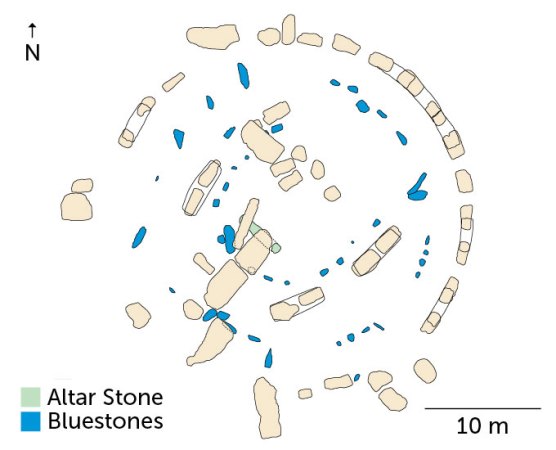
Stonehenge’s mysterious Altar Stone had roots in Scotland

Stonehenge had a hard Scottish heart, a new study suggests. The ancient site’s central stone, a large slab known as the Altar Stone, consists of rock transported at least 750 kilometers from northeastern Scotland to southern England, say geoscientist Anthony Clarke of Curtin University in Perth, Australia, and colleagues. An analysis of the age and … Read more