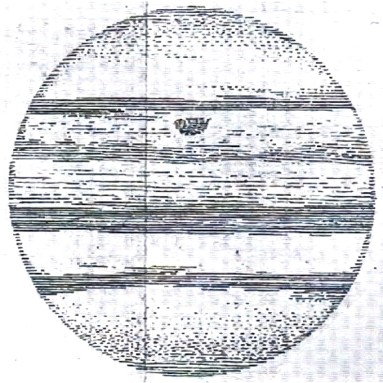
Jupiter’s Great Red Spot may be less than 200 years old

Jupiter Red Spot

Jupiter’s signature feature — its Great Red Spot — might not be the same dark spot seen on the giant planet more than three centuries ago. From 1665 to 1713, astronomer Giovanni Domenico Cassini and others observed a dark oval — nicknamed the Permanent Spot — on Jupiter at the same latitude where the Great … Read more

Jurassic Park inspires a new way to store DNA data

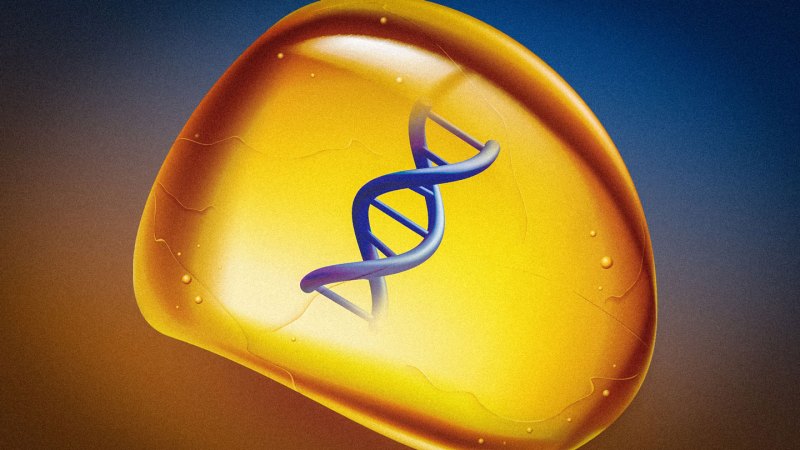
A close-up illustration of a translucent amber-colored rock with a DNA double helix held inside

Sometimes science fiction does inspire science research. À la Jurassic Park’s entombed mosquito, scientists have developed a method to store DNA in an amberlike material and still extract it easily hours later. This storage method is cheaper and faster than existing options, the researchers report in the June Journal of the American Chemical Society. If … Read more

NASA’s Perseverance finds its first possible hint of ancient Mars life

An image of a rock on Mars taken by the NASA rover Perseverance. Rocky white stripes flank a clay-colored area that is speckled with dark spots.

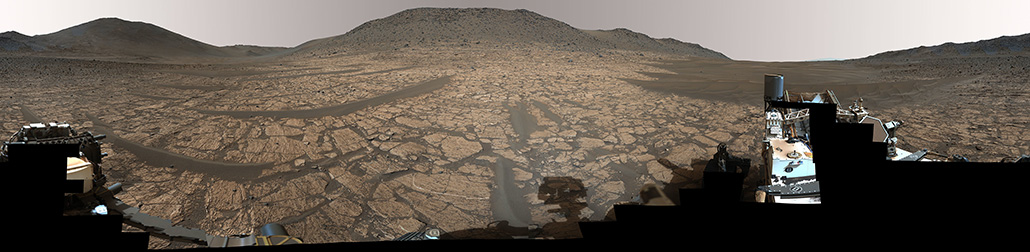
NASA’s Perseverance rover has bagged its first hint of ancient microbes on Mars. “We’re not able to say that this is a sign of life,” says Perseverance deputy project scientist Katie Stack Morgan of NASA’s Jet Propulsion Lab in Pasadena, Calif.  “But this is the most compelling sample we’ve found yet.” The rover drilled up … Read more

Was Egypt’s first pyramid built with hydraulics? The theory may hold water

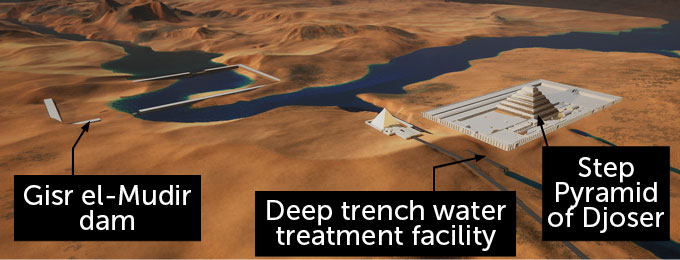
Egyptian King Djoser

Waterpower may have given a big lift to builders of Egypt’s oldest known pyramid, the nearly 4,700-year-old Step Pyramid of Djoser at Saqqara. Ancient architects built a hydraulic system for hoisting stone blocks that were used to assemble King Djoser’s six-tiered, roughly 62-meter-tall pyramid, scientists propose August 5 in PLOS ONE. Controlled flows of water … Read more

Earthquakes added to Pompeii’s death toll

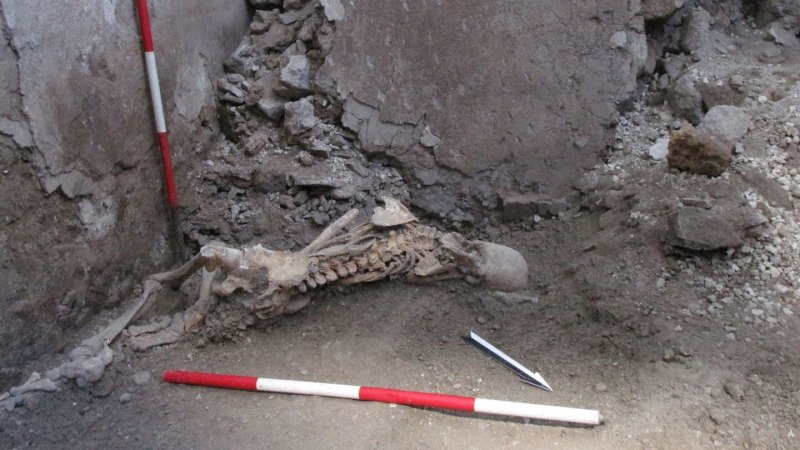
A photo of a skeleton with broken bones in an excavated house in Pompeii, Italy.

In A.D. 79, a massive volcano in southern Italy suddenly, explosively awoke, leading to one of the ancient world’s deadliest natural disasters. Ash and gas from the eruption killed at least 1,500 people in the ancient cities of Pompeii and Herculaneum. Now, a new analysis suggests that powerful earthquakes concurrent with the eruption may have … Read more

4 questions about the uranium needed for next-generation nuclear reactors

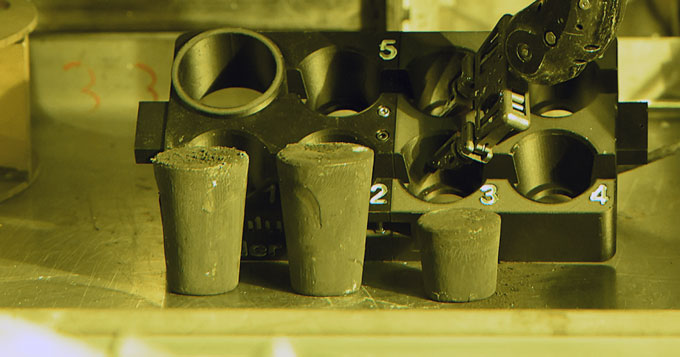
Laboratory equipment used to produce high-assay low-enriched uranium.

Nuclear power of the future is going to need fuel. That has governments, energy companies and nuclear engineers clamoring to get their hands on HALEU: high-assay low-enriched uranium. HALEU (pronounced like “Hey, Lou”) was previously a niche material, used mainly in nuclear reactors conducting scientific research. But now, multiple companies in the United States have … Read more

The North Star is much heavier than previously thought

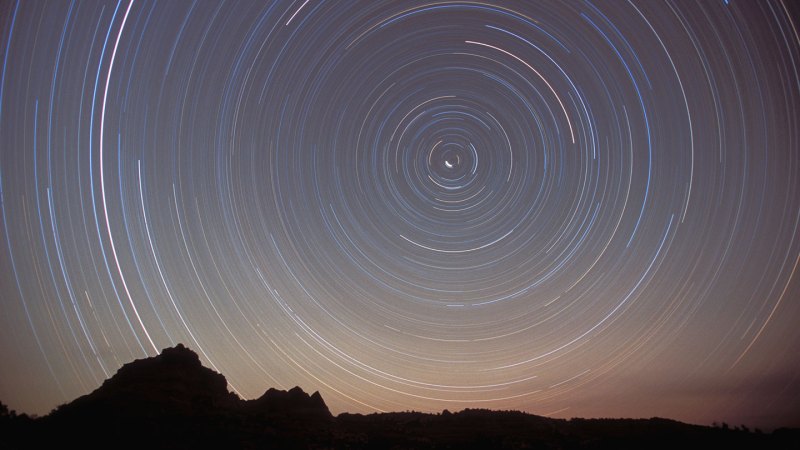
A time-lapse photo of the night sky over Coyote Buttes, Ariz., shows stars leaving circular trails around a bright point in the middle, which is the North Star.

The star marking true north is a good deal heavier than we thought. The North Star is 5.1 times as massive as the sun, astronomers report in work submitted July 12 to arXiv.org. That value, calculated from the motion of a much fainter star that orbits the luminary, is nearly 50 percent heavier than a … Read more

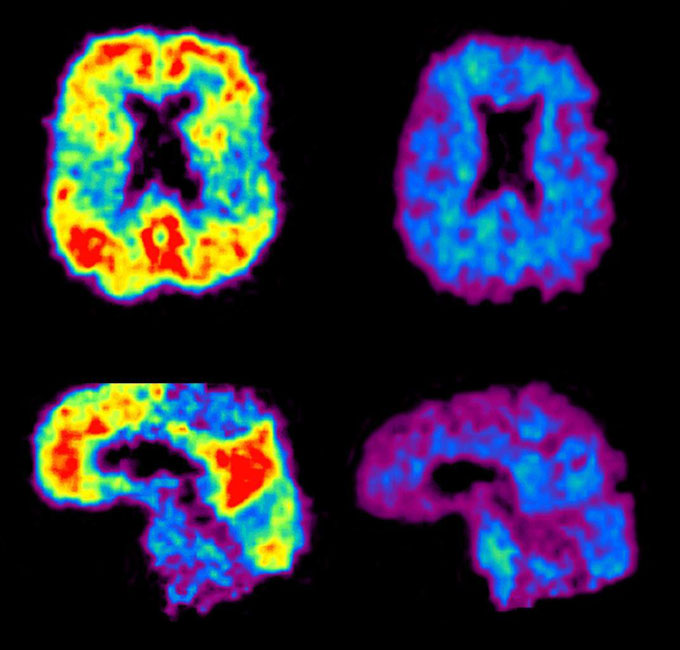
Alzheimer’s blood tests are getting better, but still have a ways to go

A vial of blood is put into a tube rack, with medical images of a brain in the background.

Alzheimer’s disease is hard to diagnose. But proteins in the blood might provide clarity. A series of recent findings, presented at the annual Alzheimer’s Association International Conference in Philadelphia and in research papers, raise the possibility of a simple blood draw to help doctors figure out if a person’s cognitive problems are caused by Alzheimer’s … Read more